Updated September 24, 2026. Choosing welding respiratory protection starts with the exposure—not with a particular filter. P100 filters can be part of an appropriate respirator assembly, but they are not required or sufficient for every welding job. They also do not make the surrounding air safe for coworkers.
Assess the work before selecting a respirator
Identify the base metal, coatings, consumable, process, work location, and ventilation arrangement. The workplace assessment must determine the relevant contaminants and exposure conditions. A respirator suitable for one task may be unsuitable for another, even when both are called welding.
Engineering controls and work practices should address the exposure at its source. Where respirators are required, the employer must select appropriate equipment and implement the applicable respiratory-protection program. OSHA 1910.134 covers selection, program requirements, medical evaluation, fit testing, use, and maintenance.
Understand the filter's limits
P100 is a particulate-filter classification, not a guarantee that a worker can breathe without risk. The classification addresses particle filtration under specified test conditions and resistance to oil aerosols. It does not establish protection against gases, vapors, or oxygen deficiency. NIOSH explains particulate-filter classes and their limitations.
A filter's laboratory efficiency is not the protection factor of the complete respirator. Selection, assembly, fit, and use all matter. A high-efficiency filter cannot correct air leaking around the facepiece or make an unapproved combination of parts suitable.
Air-purifying respirators do not supply oxygen. Do not rely on a P100 half mask in an oxygen-deficient, unknown, or immediately dangerous atmosphere. Confined-space welding requires its own assessment and procedures, not simply a different filter.
Use the complete approved assembly
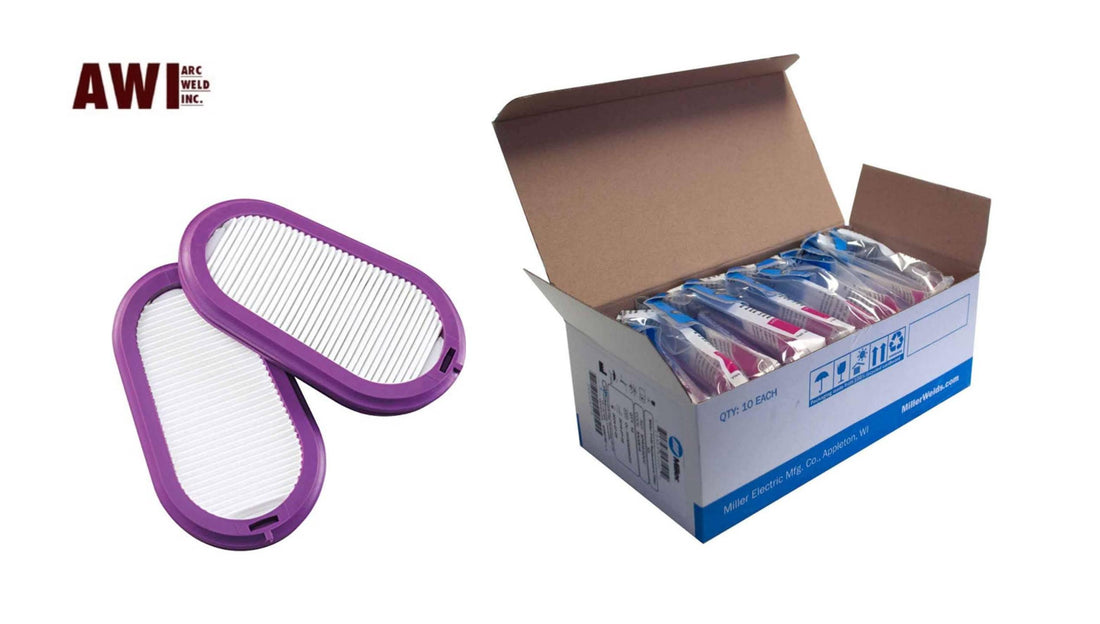
Match replacement filters and components to the respirator manufacturer's approved parts list. A filter does not fit every respirator, and an ordinary welding helmet does not become a respirator by attaching a filter to it. Check the facepiece model, generation, filter part number, and required retainers or covers before ordering.
Some products include nuisance organic-vapor relief. Do not treat that wording as permission for exposure above the manufacturer's stated limits or as universal gas protection. Our P100 uses and limitations guide explains the distinction.
Fit and maintenance are ongoing requirements
For required use of a tight-fitting respirator, follow the program's medical-evaluation, fit-testing, and training requirements. A user seal check each time the respirator is put on is separate from a fit test and does not replace it. Facial hair or other equipment must not interfere with the sealing surface or valve function. OSHA explains the fit-test and seal-check distinction.
Inspect, clean, and store the equipment according to its instructions. Replace filters using the manufacturer's criteria and workplace program, not a claim that they last indefinitely or a generic monthly schedule. Leave the exposure area before removing the respirator or dealing with a fit, damage, or breathing problem.
Keep the other controls and PPE in place
A respirator does not replace the appropriate welding helmet, primary eye protection, gloves, protective clothing, fire precautions, or ventilation. Clothing should be selected for the work; calling a garment fireproof is not an adequate specification. The job's hazard assessment must consider the entire work area and the people around it.
For replacement-part planning, keep the approved assembly and filter numbers with the shop's reorder record. Our P100 filter buying checklist helps organize those details. Select the protection first, then buy the correct parts—not the other way around.